博文

What Are Lenses for?

图片
  Lenses are everywhere in the world around us - everything from car headlights and flashlights to the LED lights used in electronic dashboards.   Our eyes may contain the most amazing lenses. Think about what happens when you look at the world around you. One minute you're staring at the ground in front of your feet. A few seconds later you hear a plane whizzing by, turn your head and watch it fly by. Do this trick with a pair of binoculars and you will find that it takes you a long time to adjust your focus from near (looking at the ground) to far (looking at the plane). Try it with the naked eye and you won't even notice what you're doing. That's because your eyes have  flexible lenses , controlled by tiny muscles that project outward and change shape instantly to focus on anything from fingerprints on your fingers to the surface of the moon. How amazing is that? Custom MgF2 Coated Achromatic Lenses   A variety of lenses We all have  lenses  in our eyes,...

Flat or domed lens ports

图片
One of the most important but often misunderstood features of underwater camera housings is the lens port. The planar port was all that was available for underwater photography from 1893 until 1931, when the hemispherical domed port was first used to correct for the refractive properties of water. Both planar and domed ports have a place in underwater photography, and it is important to understand the theory and practice of each. For underwater photography with   wide-angle lenses , the dome port is the best choice, but if starting or ending a shot on the surface, or if you need to use a long lens for close-ups, you should use the flat port.   Flat ports - Flat ports do not correct for distortion caused by differences in light refraction index between air and water. When used underwater, the use of a flat port introduces many aberrations. They are   Refraction - This is the bending of light waves as they pass through media with different optical densities (air inside the ...

An overview of Fused Silica

图片
Fused Silica Fused silica is amorphous silicon dioxide. It can be obtained e.g. by melting silica powder such that the grains are fused together, and cooling it down fast enough to avoid crystallization. Fused silica in a more or less purified form belongs to the most important optical glasses, or more generally optical materials, both for a wide range of bulk optical components and in fiber optics. There is also a variety of silicate glasses, which have fused silica as their main component but contain additional substances such as soda, alumina, germania or lime. They generally have much lower glass transition temperatures and also differ from pure silica in many other respects, e.g. in terms of the transparency range and the thermal expansion coefficient. Fused silica is sometimes called fused quartz or quartz glass.  However, it should be kept in mind that it is an amorphous material, while quartz is crystalline. (When lamps are said to have a ...

Fused silica lenses for F-Theta Lenses

图片
Fused silica lenses for F-Theta Lenses Product Description Fused silica has a low refractive index than the most other optical glass materials , but it is the ideal material for the High-Power fiber lasers demand. In order to achieve minimum focal shift, large and uniform scan field. Most F-Theta Lenses needs meniscus lenses and the shaped like a hemisphere, keep good surface quality, centering and irregular is hard work. CLZ Precision Optics  is a well-known manufacturer of the optical dome, rich experience in the manufacture of hemispherical optical components. Manufacturing meniscus lenses for use in F-Theta Lenses, CLZ Precision Optics can control the centering less than 20 seconds when the lens' diameter is more than 50mm, surface quality is better than 20-10, and irregular can be meet 0.5 fringes or better. CLZ Precision Optics manufacture Fused silica lenses  for F-Theta Lenses, such as Meniscus lenses, Double convex lenses, and fused silica protective windows.

Custom Silicon Spherical Lenses

图片
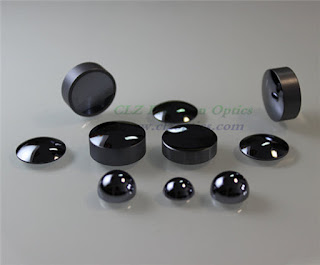
Custom Silicon Spherical Lenses Product Description Custom Silicon Spherical lenses  widely used in Near-Infrared (1.5-3.0 microns) and Mid-Wave IR (3-5 microns) Thermal Imaging Lenses. We provide Silicon lenses  with feature precision polished surface, custom coating, such as broadband anti-reflection coated, Diamond-Like-Carbon (DLC) Coating. And silicon is low-density materials, silicon lenses is ideal for reducing the weight of the imaging lenses. Benefits Low Dispersion and Density Transmission from 1.2 to 7μm Custom Optical Lenses Custom Optical Coatings Best metrology testing equipment CLZ Precision Optics is one of China’s leading optical manufacturing companies. We manufacture a wide range of optical components for many different fields like Industrial Laser, Consumer products, Environmental Monitoring, Photography and Aerospace and R&D. 

THz Lenses

图片
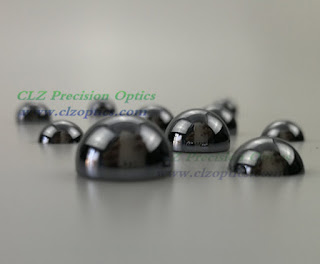
THz Lenses Product Description Silicon suited for making  THz components , it is a very important tool for coupling terahertz (THz) radiation into antennas and detectors in integrated circuits. CLZ Optics production Spherical, Hyper-Hemispherical, Hemispherical, Hypo-Hemispherical, and Bullet Silicon lens used for terahertz. CLZ optics  has stock with diameter 10.0mm and 12.0mm Hemispherical silicon lens . And we can production silicon lens according to your request and the diameter from 8.0mm to 100mm, for the focusing THz radition we can offer meniscus lenses. Product   Features Mounted in a fixed lens mount Easy to focus or collimate terahertz radiation Function For terahertz beam guidance between emitter and detector, we offer superhemispherical and elliptical silicon lenses and aspheric TPX lenses with different diameters and focal lengths. Terahertz Spectroscopy A key advantage of terahertz spectroscopy is the ability to penetrate opaque samples witho...

What are the advantages of 96% silica glass?

图片
Advantages of   Fused Silica/Quartz Glass   Incredibly thermally shock resistant (can be taken from red heat and plunged into water without cracking) Low coefficient of thermal expansion. Optical transmission properties from ultra violet to infra red. Good chemical resistance. What is the use of silica in mirror? Silica, which can be mined or refined from sand, is used to make glass. For the production of high-quality scientific grade mirrors a few other types of glass are used. Is fused silica quartz? Fused Silica and Quartz are both extremely pure materials featuring very low thermal expansion and excellent optical qualities. The main difference between the two is that Fused Silica is composed of a non-crystalline silica glass, while Quartz is made from crystalline silica. What is fused silica used for? Fused silica as an industrial raw material is used to make various refractory shapes such as crucibles, trays, shrouds, and rollers for many high-temperature thermal processe...